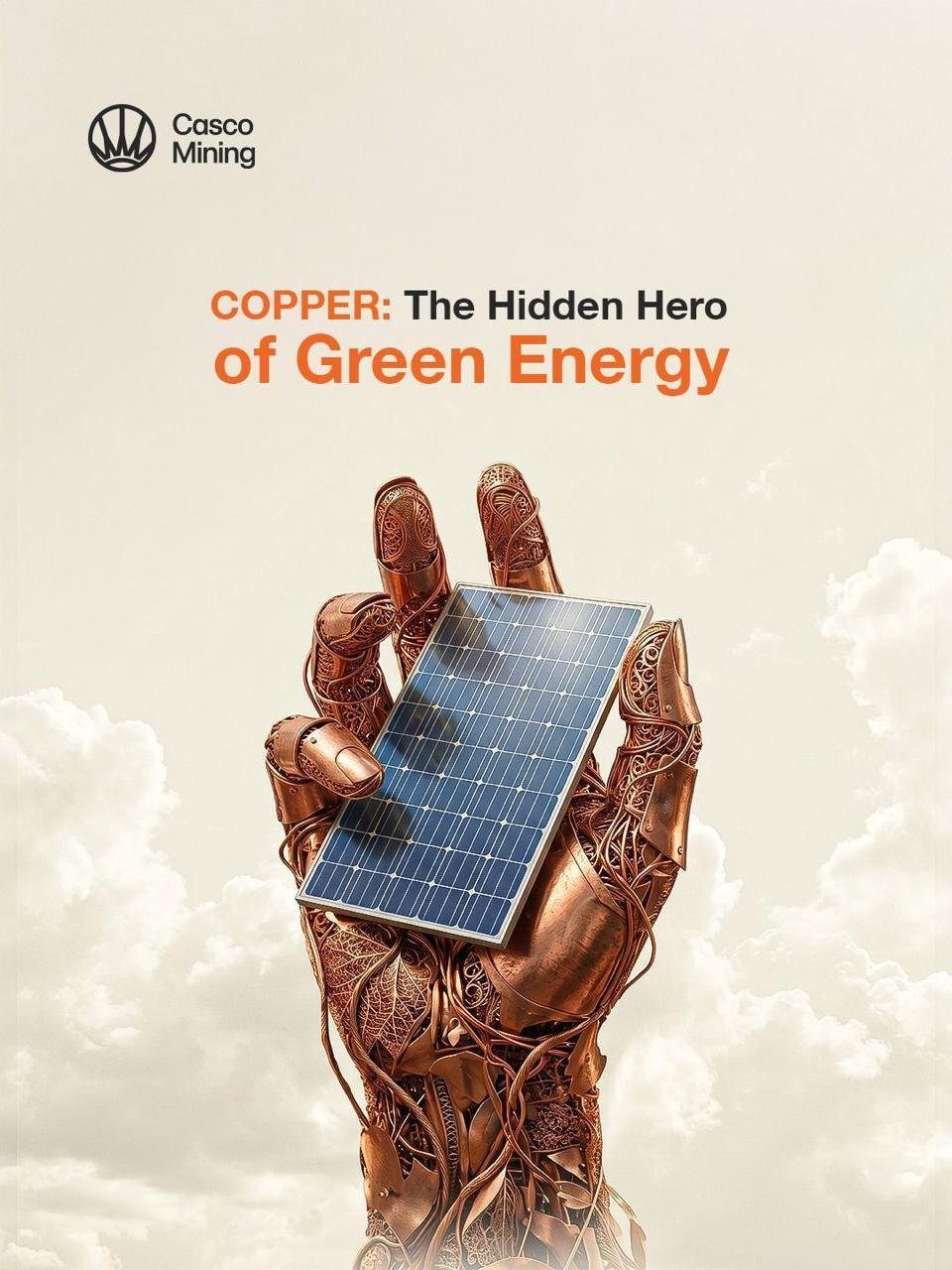
Renewable energy may seem to be all about solar panels and wind turbines. Yet behind this global transformation stands one indispensable material: copper.
Every solar power plant, every wind turbine, every electric vehicle, and every modern power grid depends on significant quantities of copper. As a result, copper has become one of the most strategic commodities at the heart of the global transition to clean energy.
The International Energy Agency (IEA) projects that demand for copper will continue to grow through 2040, driven by the rapid expansion of renewable energy, electric vehicles, and electricity grid infrastructure. According to the International Copper Association, global copper demand is expected to increase by approximately 12.6 million tonnes between 2020 and 2040.
Copper is far more than a material for electrical cables. It is a critical component in modernizing power grids, expanding EV charging infrastructure, supporting data centers, and enabling the growth of artificial intelligence. The green transition does not reduce dependence on mining—it changes which minerals the world depends on.
An S&P Global report published in early 2026 projects that annual copper demand could reach 42 million tonnes by 2040, compared with approximately 28 million tonnes in 2025. Without sufficient investment in new mining projects and processing capacity, the market could face a supply gap of up to 10 million tonnes.
This makes copper a key indicator of the world's readiness for the energy transition. Climate ambitions cannot be achieved through policy alone; they also require mines, processing facilities, resilient supply chains, and modern infrastructure.
At CASCO, we believe the relationship between copper and renewable energy represents a long-term structural transformation rather than a temporary market trend. The future will belong not only to those who extract copper, but to those who transform it into responsible industrial value.
Copper will remain at the core of the global energy transition.